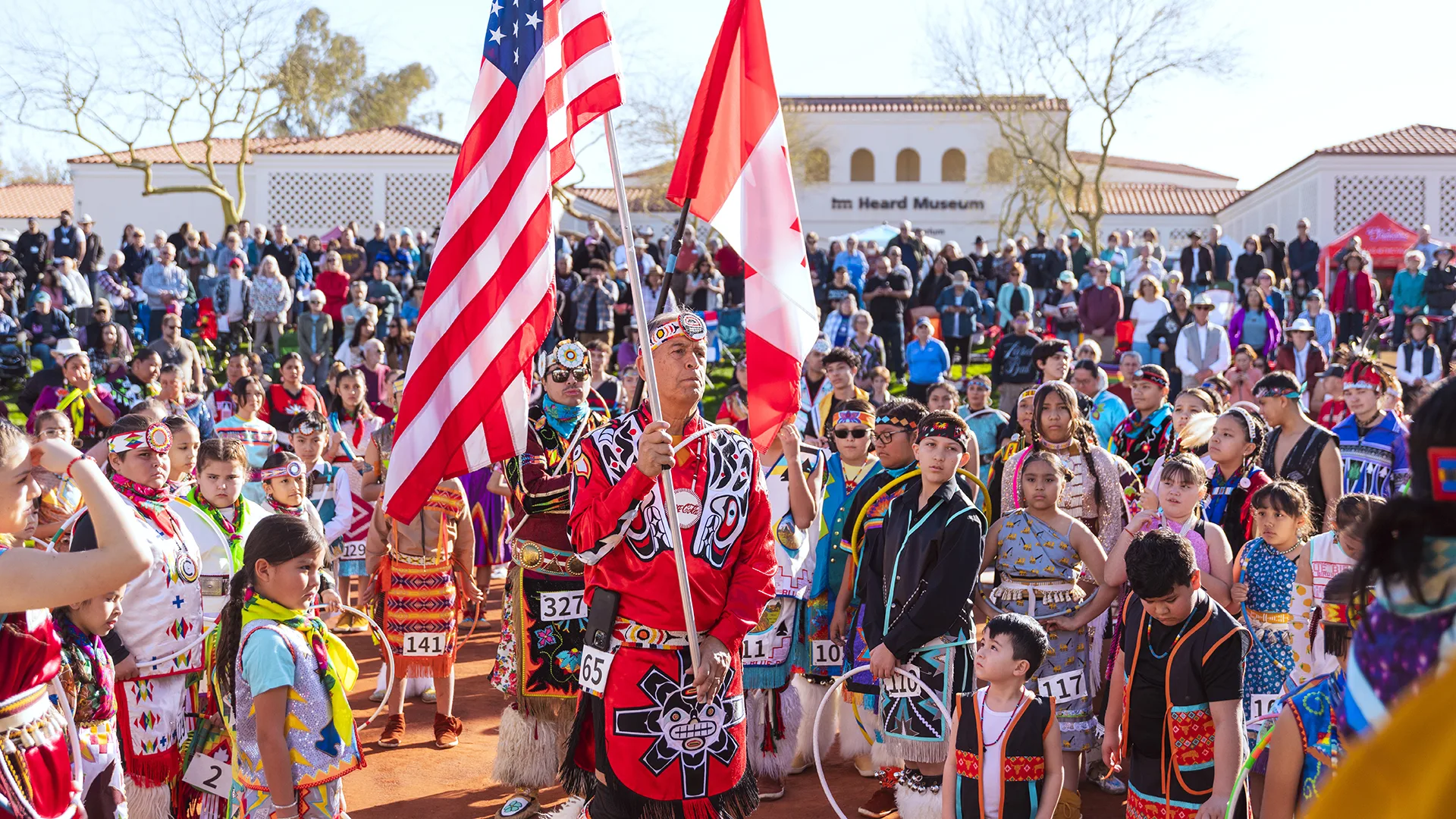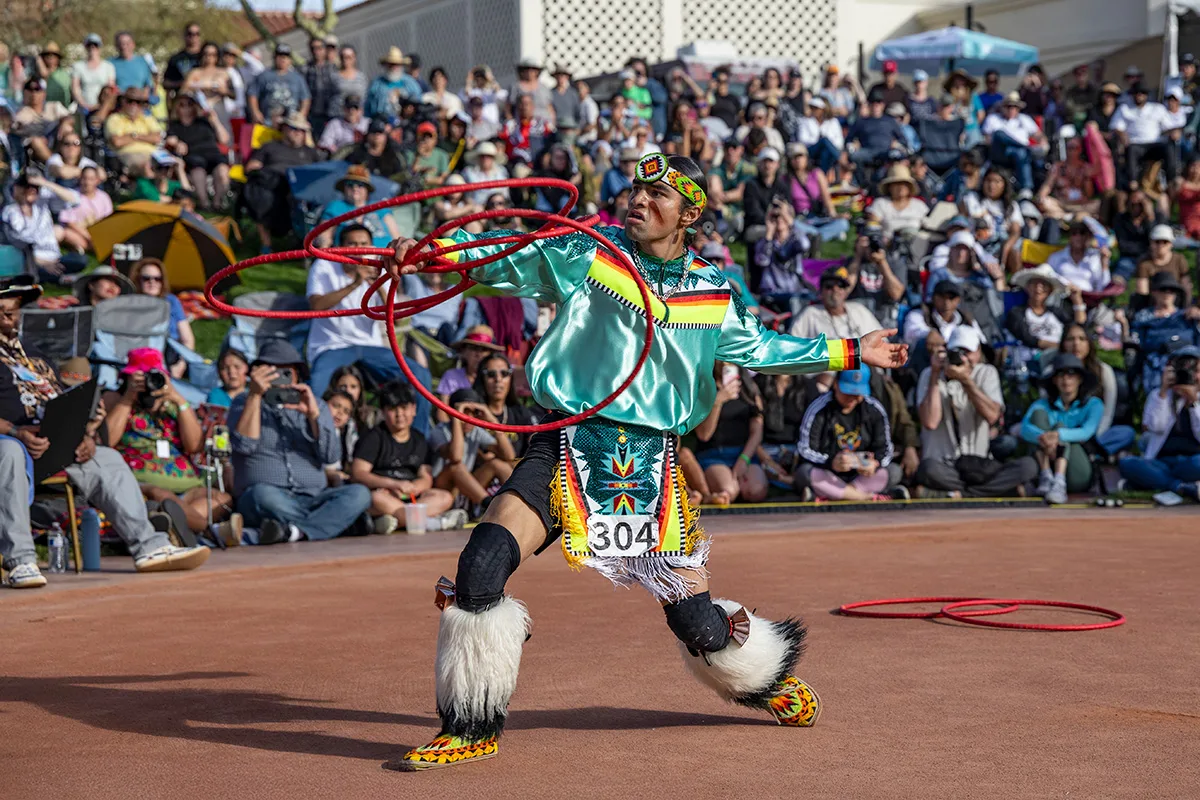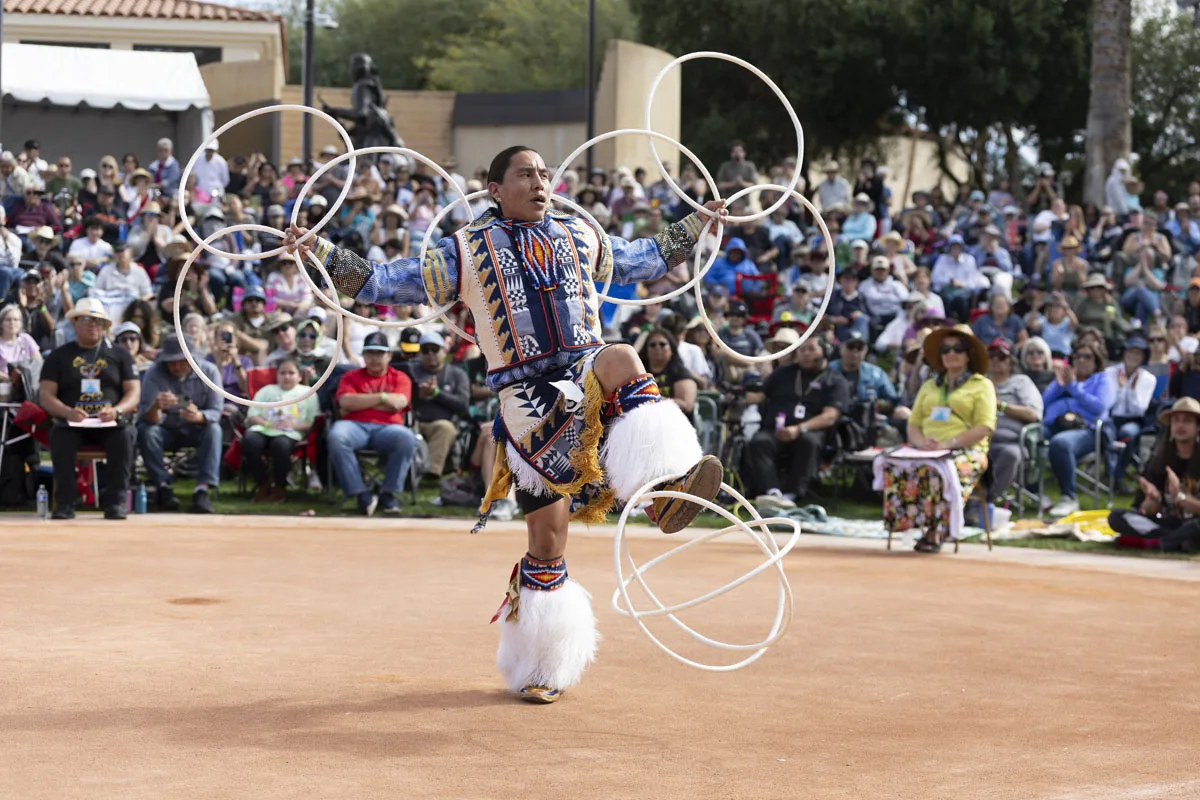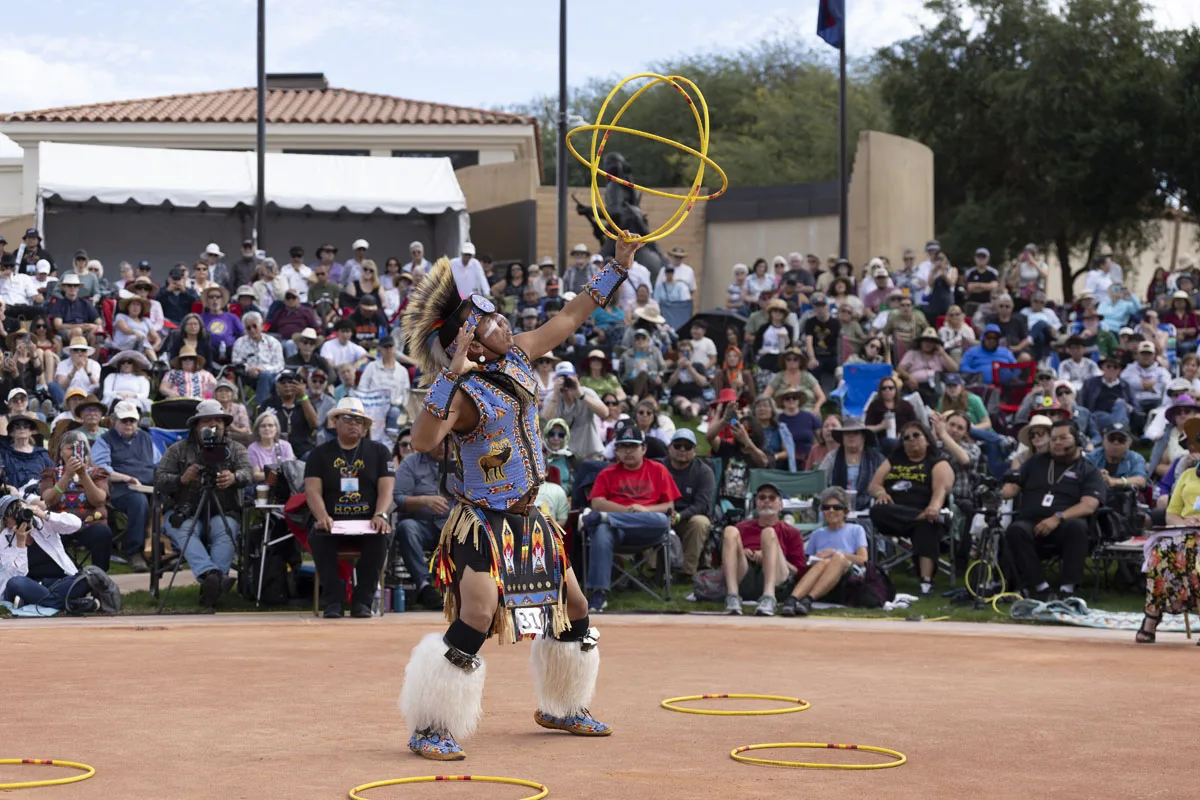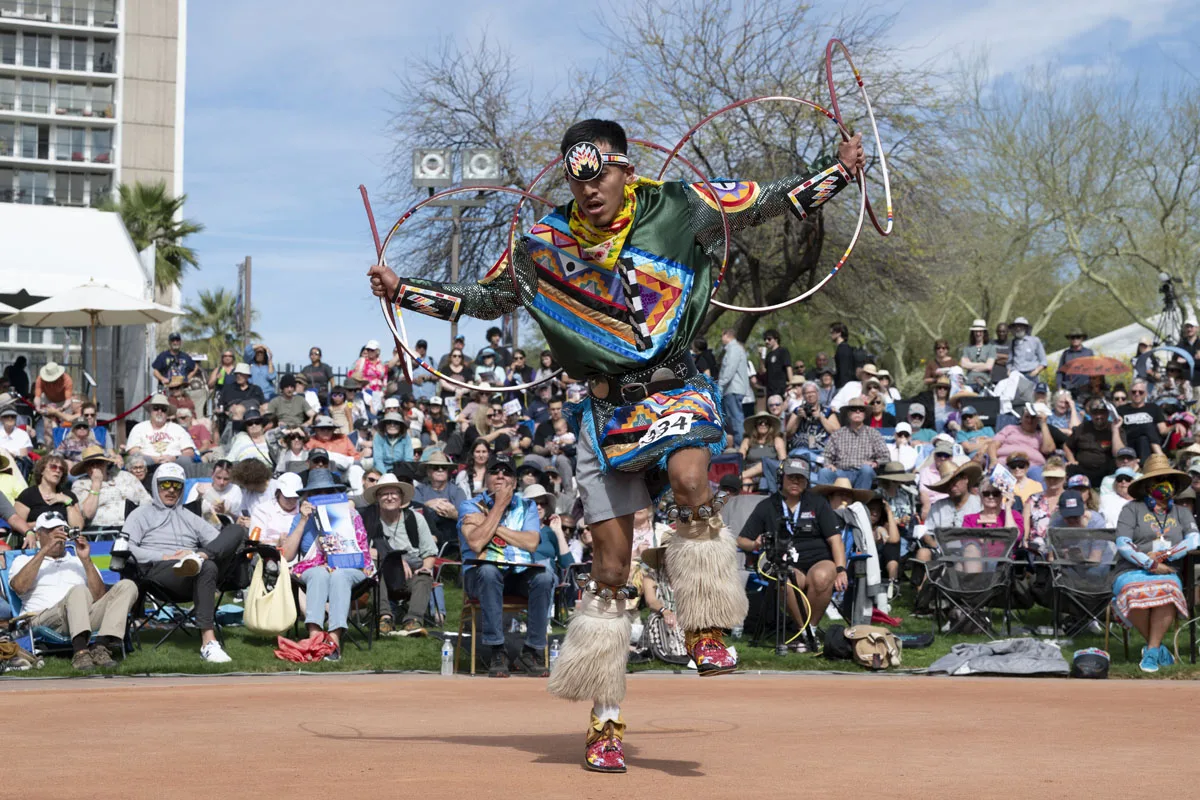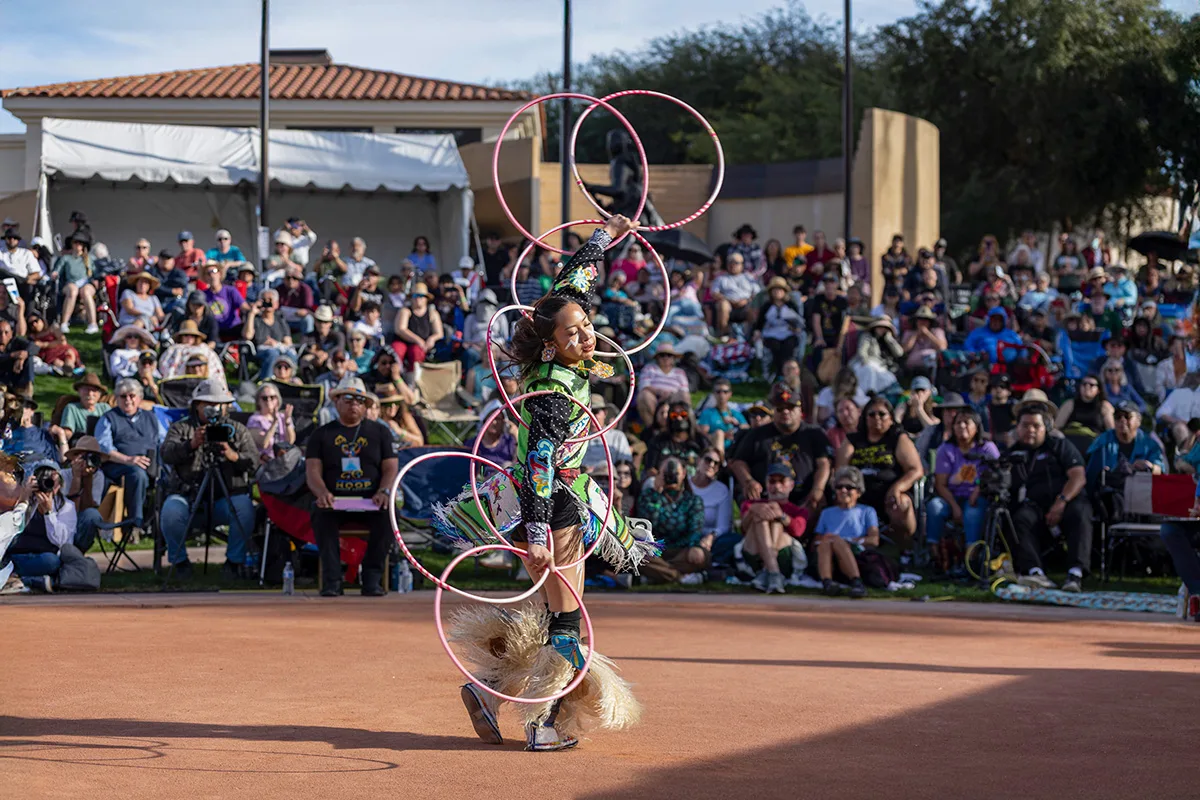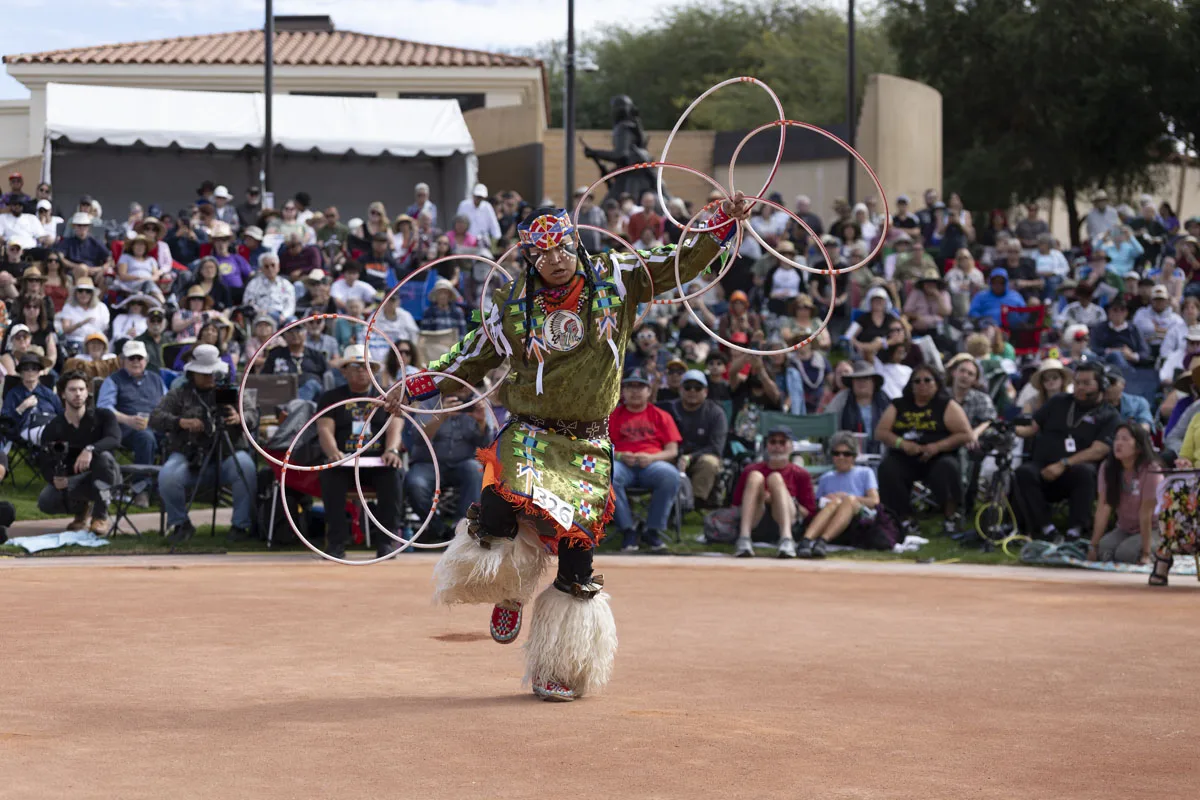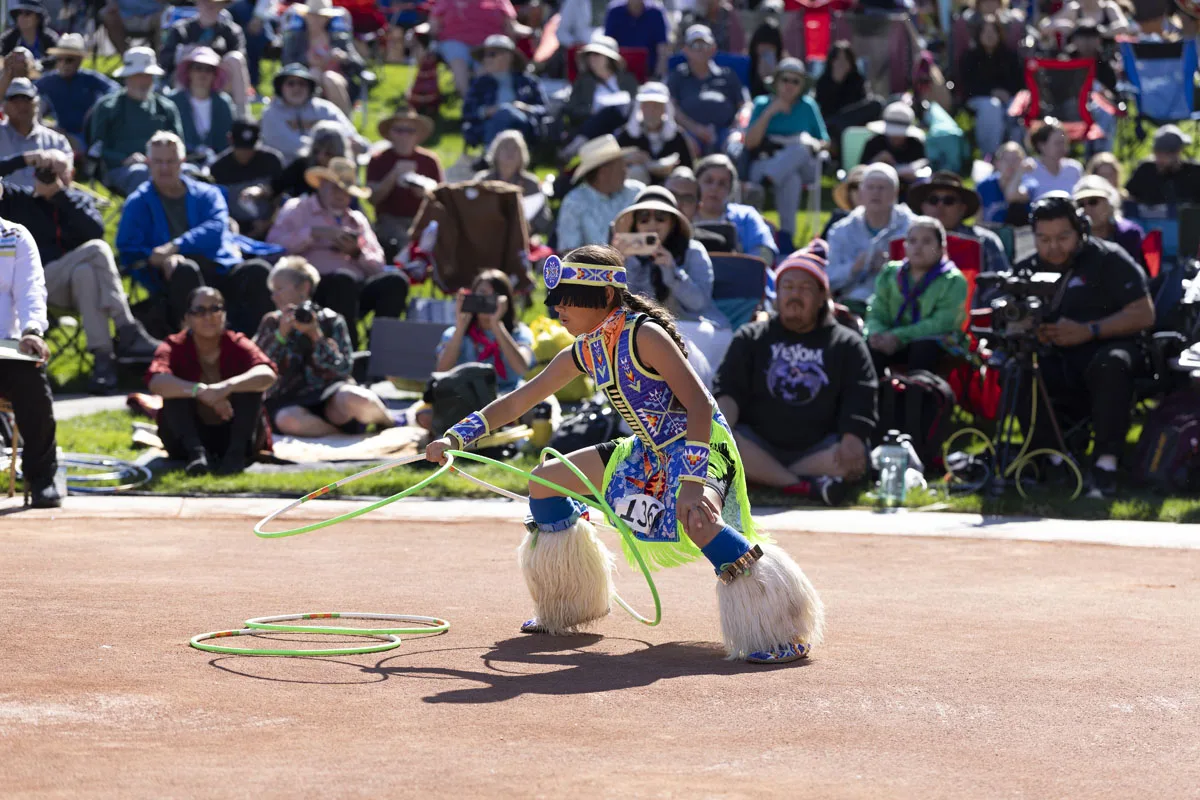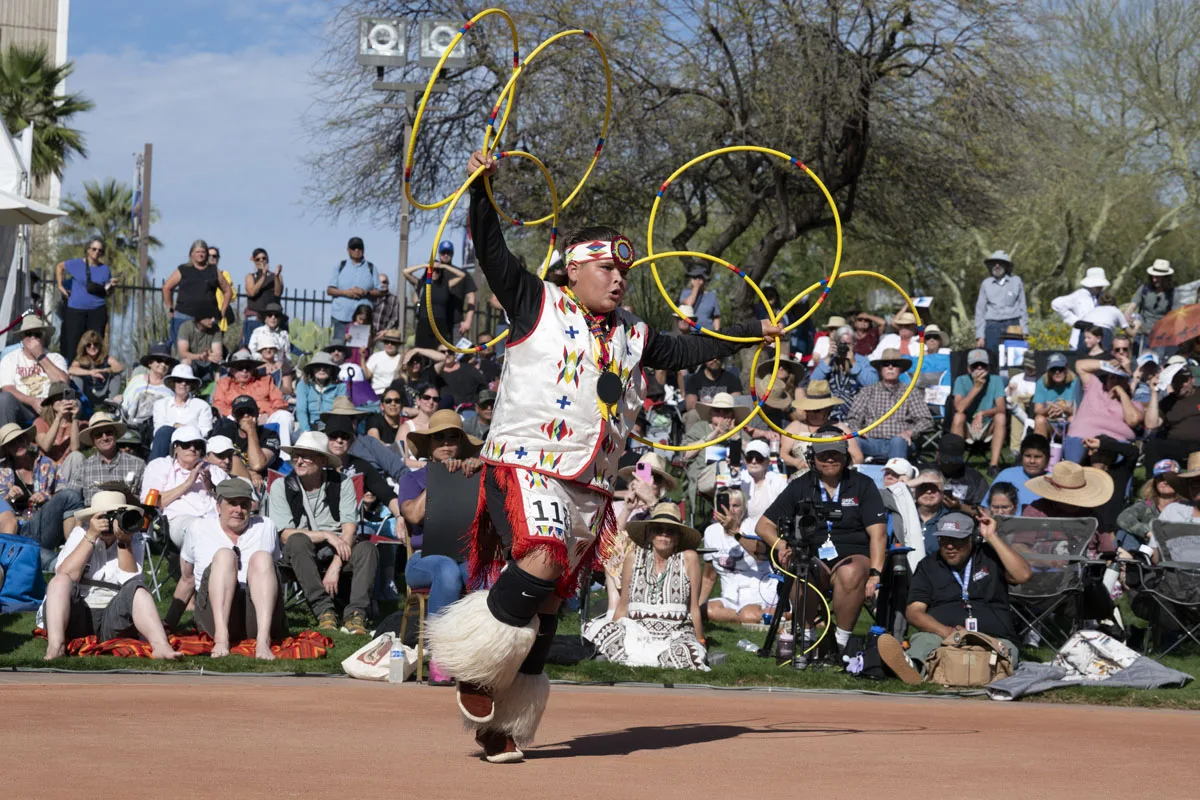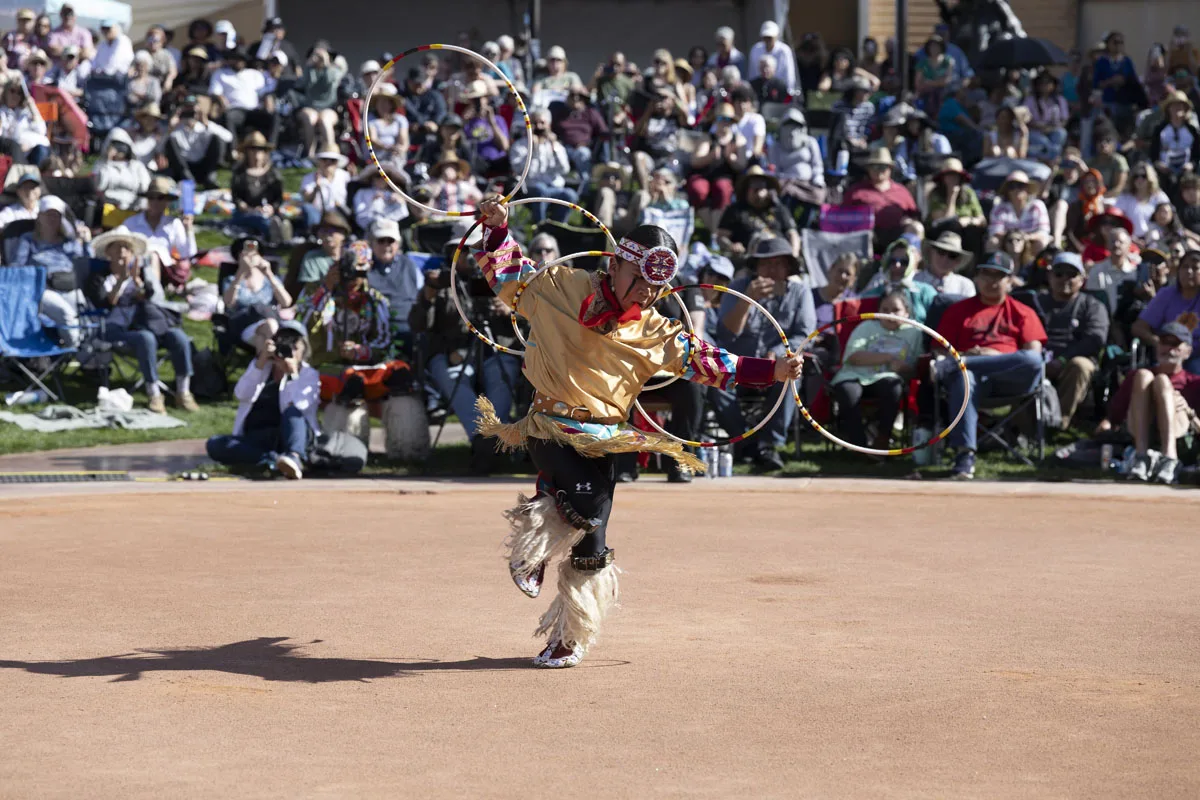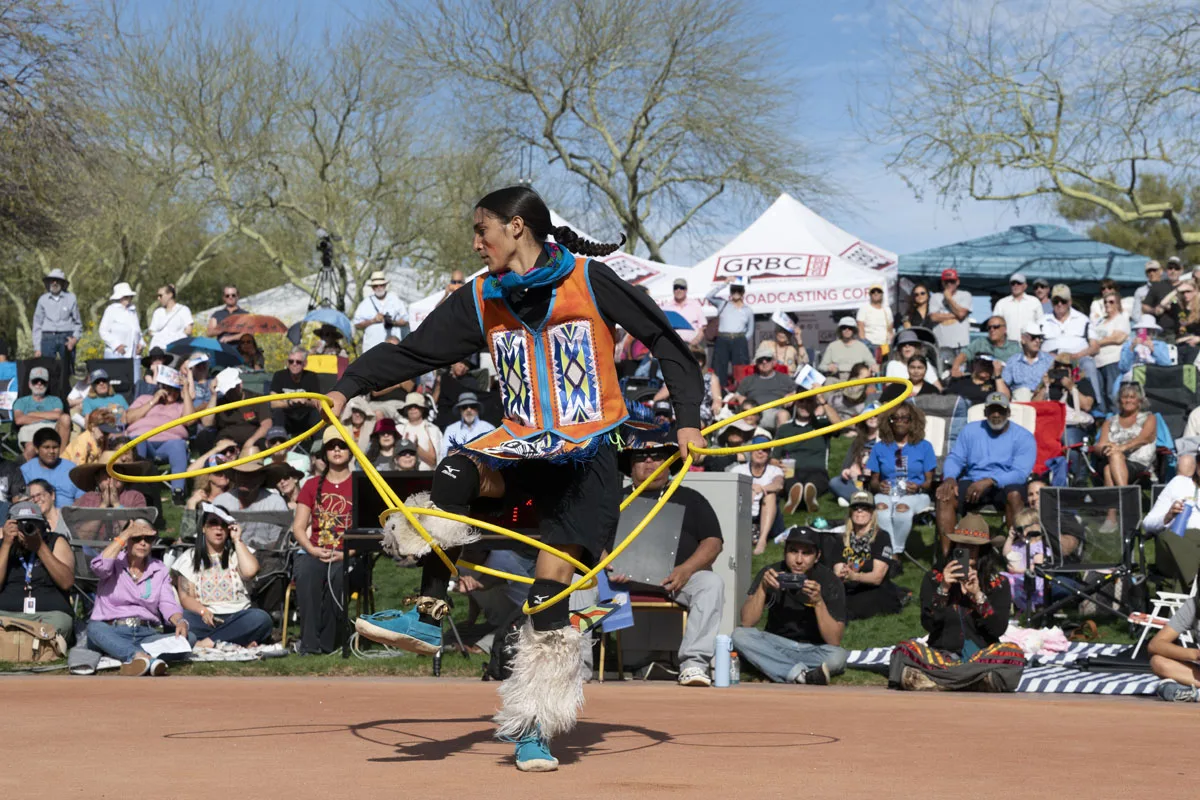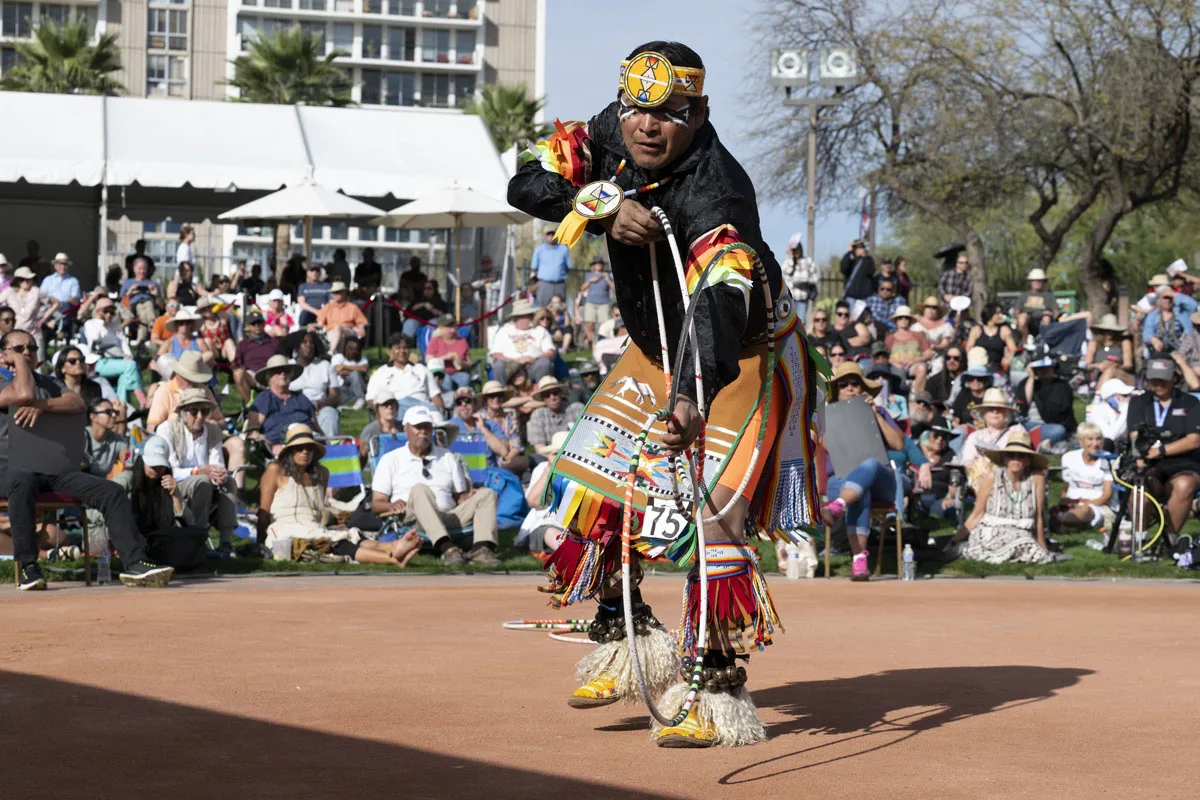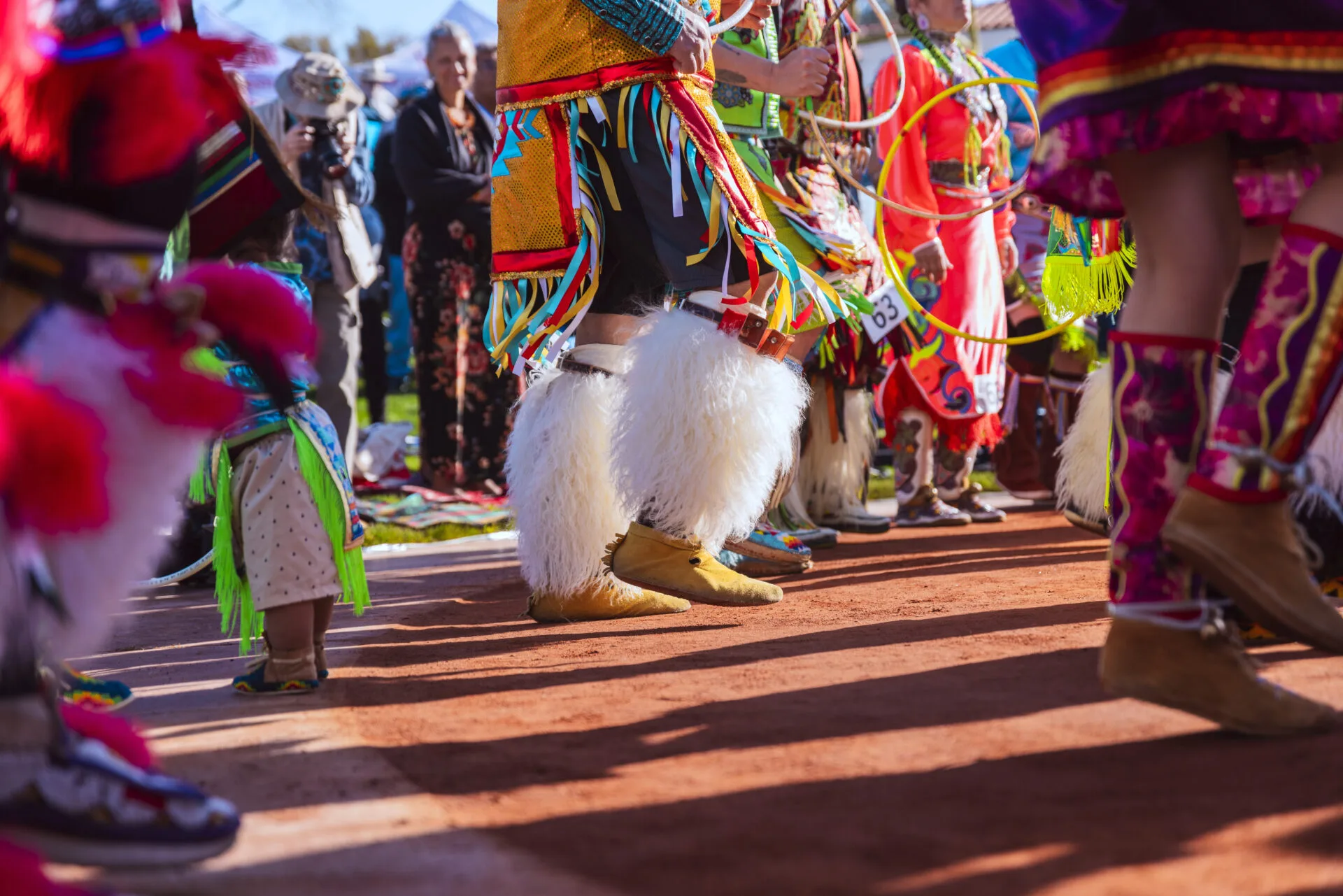
Join us for the 36th Annual World Championship Hoop Dance Contest at the Heard Museum!
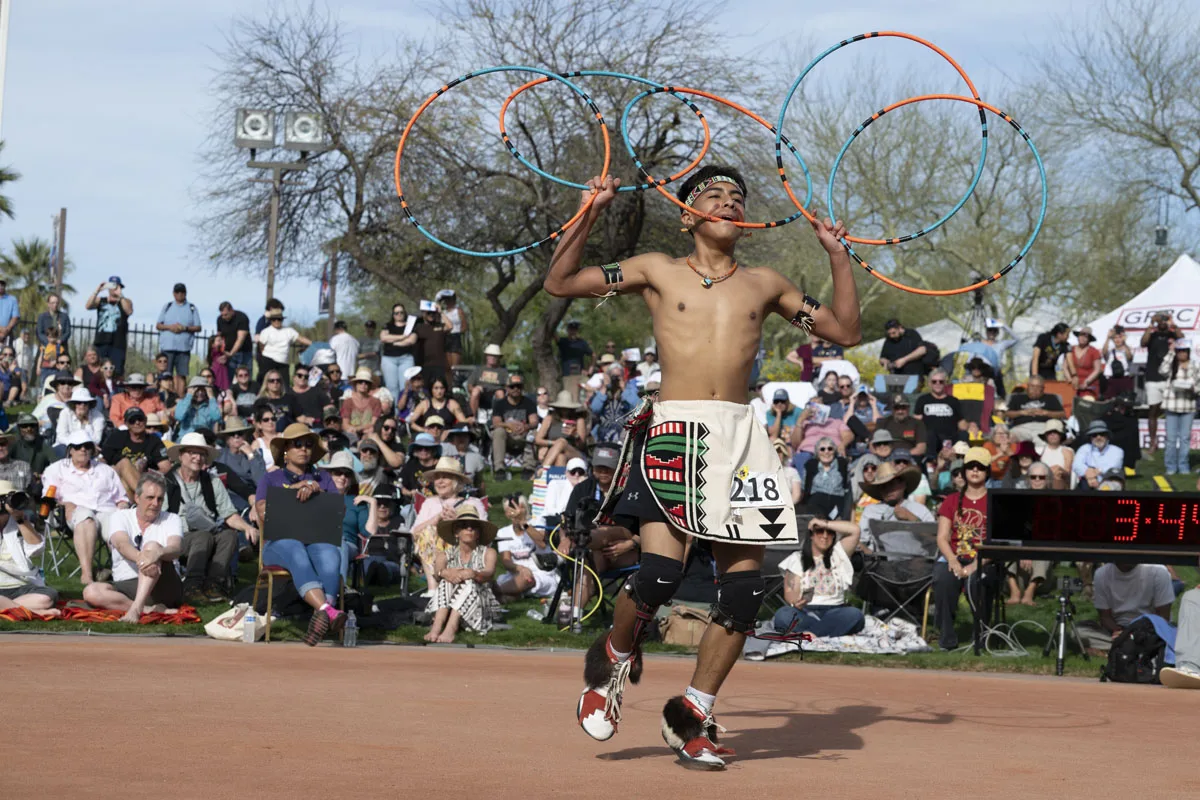
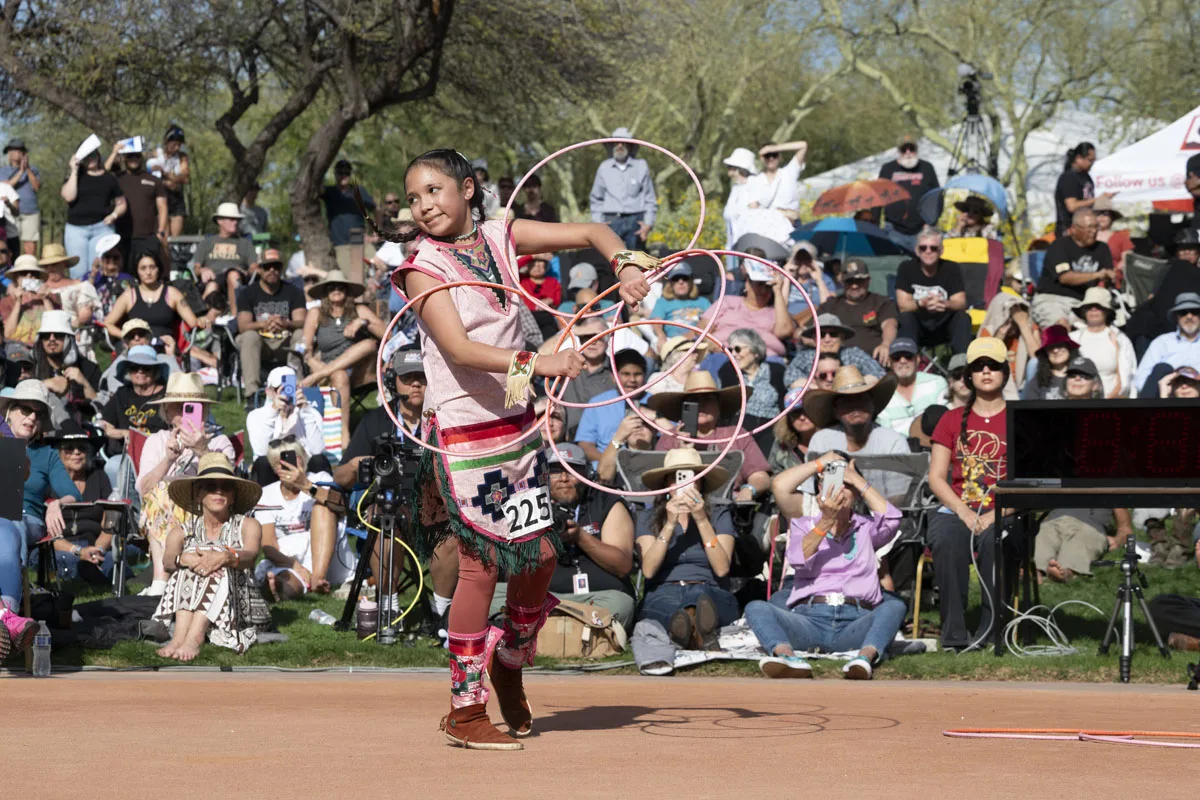
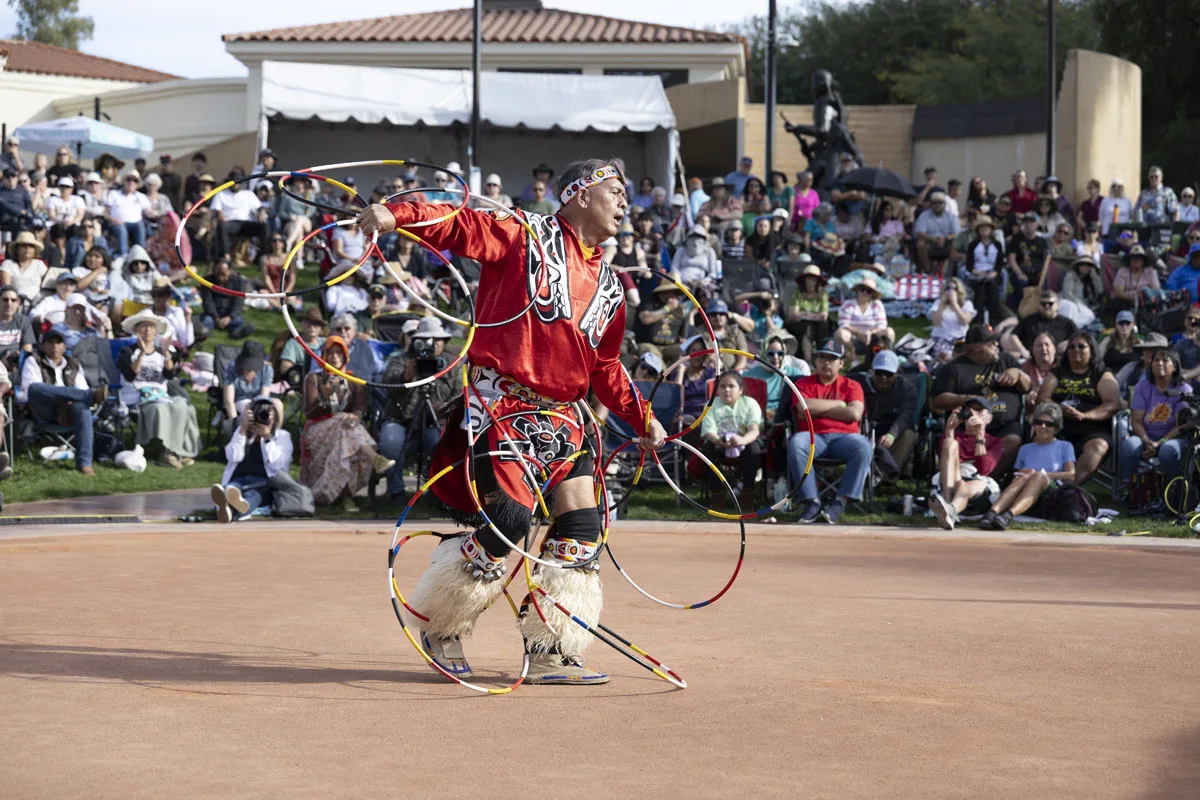
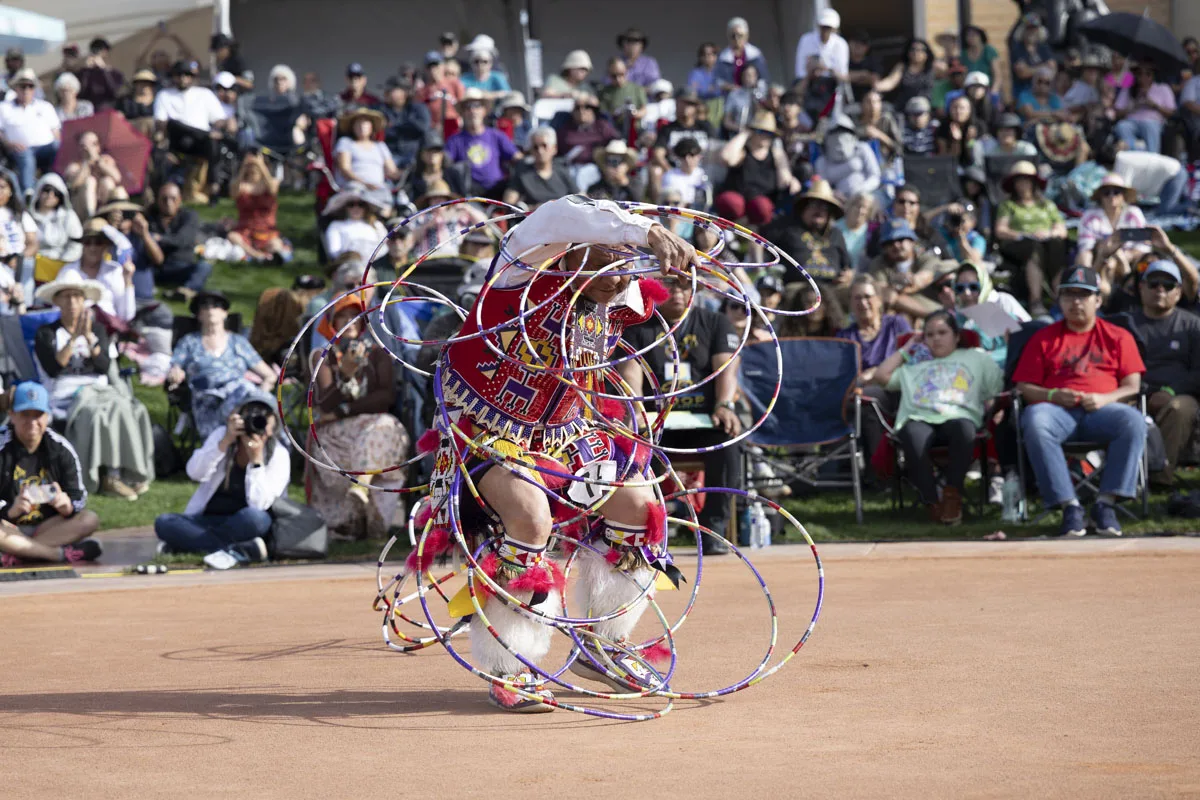
Since the first World Championship Hoop Dance Contest hosted at the Heard Museum in 1991, this competition has become a cornerstone for cultural preservation, celebrating the profound history of hoop dancing within Indigenous communities. The annual event showcases more than 100 Indigenous dancers from diverse tribal backgrounds throughout North America while displaying their masterful skills to thousands of community members, families, and fans.
Be part of the artistry, athleticism, and excellence of Indigenous peoples at this thrilling two-day championship in Phoenix, Arizona that promises to captivate, educate, and inspire all who attend.

Food & Drinks
Witness all the World Championship Hoop Dance Contest excitement while enjoying mouthwatering food & drinks from local vendors, plus the Heard Museum’s Coffee Cantina and the award-winning Courtyard Café featuring southwestern specialties.

Live from the Arena
Hear from Emcee Dennis Bowen, Sr. (Seneca) committing 30+ years of coverage, Arena Director Eric Manuelito (Diné) orchestrating the competition’s flow. Providing the heartbeat of the arena are The Cozad Singers and Mandaree Singers.

Family Fun Zone
Don’t miss the Family Fun Zone (open 11 a.m. — 4 p.m.) with hoop-themed art activities, games, and information about our Heardlings programs for kids and families. The Family Fun Zone at the World Championship Hoop Dance Contest is supported by APS.
Competition Schedule
Tiny Tots (5 & Under)
First Rounds
Youth Division (6-12)
Teen Division (13-17)
Adult Division (18-39)
Senior Division (40+)
Museum admission is included with event access. We invite you into the galleries to explore our current exhibitions at this time.
Second Rounds
Youth Division (6-12)
Teen Division (13-17)
Adult Division (18-39)
Senior Division (40+)
Museum admission is included with event access. We invite you into the galleries to explore our current exhibitions at this time.
Youth Division (6-12)
Teen Division (13-17)
Senior Division (40+)
Adult Division (18-39)
Museum Parking
Let us help you find alternative parking options with our Parking Map and ensure a stress-free arrival at the museum for an unforgettable experience.
Light Rail Access
Embrace eco-friendly travel, avoid traffic, and arrive seamlessly. Hop on board for a scenic journey and step off the Encanto/Central stop, a 1-min. walk via Valley Metro Light Rail.
Ride Share
Arrive in style! Join our event at the museum hassle-free with convenient ride-share options. Skip parking stress, enjoy the journey, and make memories at the museum.
Yes, tickets are available to purchase at the gate.
Note: Event closes on Sunday at 5 p.m. Culture Passes not valid during this Signature Event.
General public entry time is 8:30 a.m. Members have an early bird entry for seating at 8:00 a.m. The event starts at 9 a.m.
This is a rain or shine event. Should the weather turn grey, the competition may be postponed and/or moved indoors to the Steele Auditorium. If the forecast indicates rain, we suggest bringing jackets, umbrellas, ponchos, etc.
Parking: There is designated ADA parking in the north parking lot.
Seating: There are two areas inside the event for Elder and ADA seating.
CART Services: We are committed to making this event accessible to everyone. CART services provide real-time transcription of all spoken content into text, displayed on a screen or personal device. This service ensures that individuals who are Deaf, hard of hearing, or benefit from text-based access can fully participate.
Museum visitors can also utilize a variety of sensory-friendly resources. For museum visitors, we offer sensory-friendly resources including noise-canceling headphones, color-correcting glasses, Williams Sound personal amplifiers, weighted lap pads, and more.
Heard Museum:
10 a.m. – 4 p.m.
Courtyard Café
11 a.m. – 3 p.m.
Coffee Cantina
8 a.m. – 4 p.m.
Museum Shop
10 a.m. – 4 p.m.
Books & More
9 a.m. – 4 p.m.
Yes, we have handstamps, and you may leave and come back as you wish.
Photos and video for personal/social media is not just allowed but encouraged!
If intended use is for publication, business, or sales, permission is necessary. Please review our photo/video policy to protect the rights of Indigenous Artists, and then click this link to submit a media request form.
Yes, you are encouraged to bring a refillable water bottle (free water refill stations available), fold-up chairs, blankets, hats, sunblock, sunglasses, visors, and an umbrella/poncho.
Pop-up tents are not permitted.
Food, Beverage, & Alcohol: No outside food or drink is permitted, except for water bottles. This event has many outside food vendors as well as our Courtyard Café and Coffee Cantina. No outside alcohol is permitted.
Bags: We do not allow cooler bags inside this event. Inside the museum, normal bag policies apply.
Pets and Service Animals: Only Service Animals will be allowed into the event and must be leashed or tethered accordingly. Comfort animals are not permitted.
Firearms and Weapons: No weapons, at any time, inside or outside permitted.
Smoking Policy: Not permitted in the Museum, nor within 20 feet of the front entrance. Only allowed in designated smoking areas.
Prohibited Items: Illegal Drugs or Substances, Skateboards, Segways, Scooter, Rollerblades, bicycles, Hoverboards, and helmets. No coolers, ice chests, or pointed-Tip Umbrellas, Patrons without Shoes or Shirt.
Drone Restrictions: It is illegal to fly a drone during this event.
Dancers are judged on a slate of five skills: precision, timing/rhythm, showmanship, creativity, and speed. Contestants compete in one of five divisions: Tiny Tots (age 5 and younger), Youth (6-12), Teen (13-17), Adult (18-39) and Senior (40 and older). Cash prizes totaling $25,000 are awarded to winners in each division, and victors in each division can claim the honor of being the Hoop Dance World Champion. Through stunning performances of those women and men competing to be named the next World Champion Hoop Dancer, the event combines artistry, athleticism, tradition, and suspense for an unforgettable weekend of fellowship and competition.
Lowery Begay (Diné)
Kricket Rhoades (Kiowa/Caddo)
Quentin Pipestem (Tsuut’ina)
Jasmine Bell (Crow Creek Sioux)
Daniel Tramper (Cherokee)
Sage Romero (Tovowahamatu Numu/Tuah-Tahi)

Arena
Dennis Bowen, Sr., Master of Ceremonies
Dennis Bowen (Seneca) is an accomplished dancer, singer, and announcer who has participated in Pow Wows in the US and Canada for many years. He comes from a long family line of traditional singers and leaders, and he sang with the original Red Nations Singers in 1972. Bowen is a former president of the Western Allegheny Territory of the Seneca Nation. He has been Master of Ceremonies of the Hoop Dance World Championships since 1992.
Eric Manuelito, Arena Director
Eric Manuelito (Diné) is a Navajo lecturer, flutist, and Native arts demonstrator born in Tuba City, AZ, and raised in San Carlos, AZ. He currently lives in Tohatchi, NM. Manuelito has been involved in the Pow Wow arena for many years and is a former employee of the Heard Museum. He has served as head man dancer, head gourd dancer, and arena director for many Pow Wows throughout the U.S.
Cozad Singers, Host Southern Drum
The Cozad Singers, from the Kiowa Nation of Oklahoma, were formed in the early 1940’s by their late father Leonard Cozad, Sr., whose siblings are now taking care of the drum group duties. Since their inception, they have served as Host, Invited, or Head Singer positions at their tribal and local tribal gatherings as well as other tribal celebrations throughout the Powwow Trail, called upon as Head Gourd Dance Singers and competed in singing competitions. Throughout their travels, they’ve met friends and made new ones and even adopted relatives through the big Drum way of singing. Singing has been a way of life and continues to share and promote the culture and traditions of singing.
Mandaree Singers, Host Northern Drum
Sidrick Baker, Sr. and his two brothers, Wade and Leonard, are the backbone of the Mandaree Singers from New Town, ND. The family drum group includes Sidrick’s four sons, Rylan, Nelson, Sidrick Jr. and Mitchell plus grandson Marshall and two singing buddies John Bears Tail and Charles Eagle Speaker. The drum group was founded in the 1960s by Sidrick’s father Bill Baker. Music and singing has taken the group all across the U.S. and Canada. Bill was also part of the American Indian Dance Theater which traveled all over the world. They sing in the Hidatsa and Arikara languages and represent the Four Bears segment of the Fort Berthold Indian Reservation.
Judges
Daniel Tramper
Daniel Tramper (Cherokee), a member of the Eastern Band of Cherokee Indians, has been a hoop dancer since childhood, performing internationally and representing Cherokee traditions. A three-time World Hoop Dance Champion, he won titles in 2004, 2007, and 2009. Growing up in the Smoky Mountains, Daniel’s performances showcase the richness of Cherokee culture, which he has shared from local communities to stages abroad, including Germany. His journey in hoop dance, documented since 1967, underscores his lifelong dedication to preserving and sharing his heritage. Daniel remains an esteemed cultural ambassador for the Cherokee people, inspiring others with his artistry and accomplishments.
Jasmine Bell
Jasmine Bell (Crow Creek Sioux), an enrolled member of the Crow Creek Sioux Tribe, has been a hoop dancer for over 36 years, sharing her family’s tradition worldwide. A two-time Teen World Champion Hoop Dancer, she has performed at prestigious venues, including the Kennedy Center and Smithsonian. A mother of five, Jasmine teaches the cultural history of hoop dance and has carried on her late brother’s dream of honoring their heritage through this art form. She holds multiple tribal titles and will graduate with a Business degree from the University of Phoenix in May 2025, continuing her lifelong dedication to Indigenous representation.
Kricket Rhoads-Connywerdy
Kricket Rhoads-Connywerdy (Kiowa and Caddo) a proud member of the Caddo and Kiowa Tribes of Oklahoma, is a traditional dancer skilled in Caddo, Kiowa Buckskin, Fancy Shawl, and Jingle styles. She toured with Charles Chibitty, the last Comanche Code Talker, sharing their culture worldwide. Alongside her artist and champion war dancer husband, they raise their three children with a deep respect for tribal traditions, language, and dance, passing their heritage to future generations.
Lowery Begay
Lowery Begay (Diné), from the Diné Nation, is a celebrated hoop and fancy dancer, storyteller, and Native flutist with over 30 years of professional experience. He has competed in the World Hoop Dance Championship and won the 2004 Schemitzun Hoop Dance title. Lowery has performed globally, including at the Grand Opening of the National Museum of the American Indian. He has collaborated with notable groups like Lakota Dance Theatre and Spirit of the Mist. A proud father and grandfather, Lowery resides in Jonesborough, Tennessee, where he continues to inspire audiences through his cultural artistry and commitment to preserving Navajo traditions.
Quentin Pipestem
Quentin Pipestem (Tsuut’ina)
Quentin Pipestem, a member of the Tsuut’ina Nation, began performing at 16 with the Red Thunder Native Dance Theater, touring Canada, the U.S., and New Zealand. A three-time World Hoop Dance Champion (1992, 1993, 1995), he gained international acclaim, performing with the American Indian Dance Theater across the U.S. and Europe. Over a 35-year career, Quentin has performed worldwide, including in Brazil, Japan, and Australia. Recently, he has dedicated himself to supporting his Tsuut’ina community, providing assistance to those in need. Despite his new focus, Quentin continues to share his passion for hoop dance and Indigenous cultural expression.
Sage Romero
Sage Romero (Tovowahamatu Numu and Tuah-Tahi), of Big Pine Paiute and Taos Pueblo heritage, is a renowned hoop dancer, artist, and cultural advocate. As Director of the AkaMya Culture Group, he leads efforts in Indigenous cultural revitalization through arts and education. Sage has performed globally, blending storytelling, dance, and visual arts to promote Native traditions. A motivational speaker, he inspires communities to embrace cultural identity, health, and wellness. Sage recently established the Margaret L. Romero Cultural Studio, honoring his parents, as a hub for language, dance, and wellness classes. His creative work continues to bridge generations and foster cultural appreciation.
Our sponsors
Get Involved
Your support helps us make this vibrant event a success. Check out the ways you can be a part of it.
Questions? Contact our Hoop Dance event team: [email protected].
Feedback
For suggestions:
Share your feedback.
Sponsors
For sponsorship inquiries: [email protected].
Vendors
For vendor information: [email protected].
Volunteers
For volunteer opportunities: [email protected].